

For a lot of people, the mental image of a chiropractic visit goes something like this: you lie down on a table, a practitioner plants their hands on your back or neck, and then there is a sharp pop that echoes across the room. It is that sound, more than anything else, that keeps people from ever making an appointment. The crack feels unpredictable. The twist feels aggressive. And for patients with osteoporosis, recent injuries, hypermobility, or simply a low tolerance for forceful contact, traditional spinal manipulation is not something they are willing to try, regardless of the potential benefit.
Cadence Chiropractic in American Fork, Utah was built around a different approach. The Activator Method, the primary technique used at this practice, produces no audible sound, involves no spinal twisting, and delivers its correction through an instrument rather than manual force. For patients who have avoided chiropractic care for years because of anxiety about the process, this distinction tends to matter quite a bit.
What That Popping Sound Actually Is
Before understanding why the Activator Method works without producing that sound, it helps to understand what the sound is in the first place. The pop associated with traditional chiropractic manipulation is called cavitation. It occurs when a joint is moved quickly through its range of motion and the pressure change inside the joint capsule causes dissolved gases, primarily carbon dioxide and nitrogen, to briefly form a bubble and then collapse.
Cavitation itself is not harmful. The sound is not a bone cracking, and its presence or absence does not reliably indicate whether an adjustment was effective. Some practitioners and patients have come to associate the sound with a successful treatment, but the research does not support that interpretation. The therapeutic effect of a spinal adjustment comes from restoring joint mobility and reducing neurological interference, not from the noise that sometimes accompanies it.
The Activator Method sidesteps cavitation entirely because it does not rely on the rapid, high-velocity movement that produces it. The correction happens through a different mechanism, and for many patients, that shift in approach changes everything about their willingness to pursue care.
How the Activator Instrument Actually Works
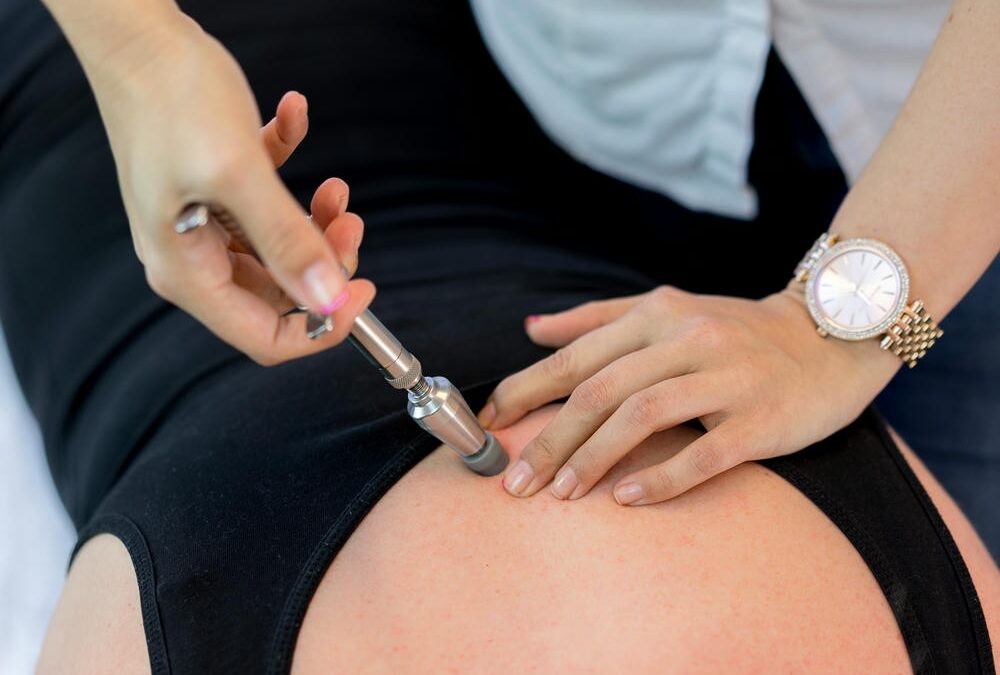
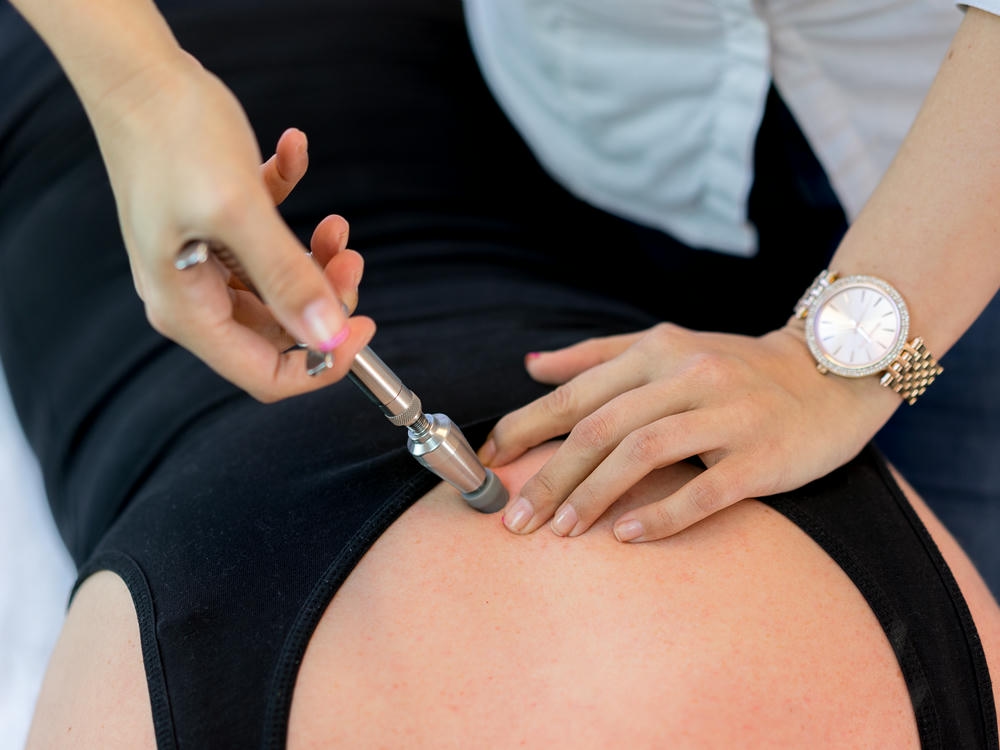
The Activator is a handheld spring-loaded device that delivers a precise, controlled impulse to a specific point on the spine or a peripheral joint. The impulse is measured in milliseconds, which makes it significantly faster than the speed at which surrounding muscles can contract in response. That speed is the key to its effectiveness.
When a practitioner performs a manual adjustment, the muscles around the target joint sometimes brace in anticipation, which can reduce the precision of the correction. The Activator’s impulse is delivered before the muscles have time to respond, allowing the correction to reach the joint without the surrounding tissue working against it. The force applied is low, the direction is controlled, and the contact point is specific. Patients typically feel a light tapping sensation, and that is the entirety of the experience.
The Activator Method is not simply a softer version of manual manipulation. It is a distinct chiropractic technique with its own assessment protocol, developed over several decades and supported by clinical research. The practitioner uses a series of leg length and muscle response checks to identify which segments are restricted and in which direction the correction is needed. The instrument is then applied at a precise angle calibrated to that assessment. Nothing about the process is guesswork.
Who Tends to Benefit Most from This Technique
The Activator Method works for a broad range of patients, but there are specific groups for whom it is particularly well suited. Older adults with reduced bone density or arthritis are often poor candidates for high-velocity manipulation, and the low-force approach of the Activator removes those contraindications from the equation. Patients recovering from whiplash, disc injuries, or post-surgical spinal procedures similarly benefit from the precision and gentleness of instrument-assisted correction.
Prenatal patients represent another group where the Activator Method shines. Pregnancy changes the body’s biomechanics significantly. The pelvis shifts, ligaments loosen, and the lumbar curve deepens to accommodate the growing baby. Traditional adjustments that involve lying prone or twisting the torso are simply not appropriate during most of pregnancy. The Activator allows for precise spinal and pelvic correction in positions that are comfortable and safe for both the mother and the baby, which is why it features so prominently in Cadence Chiropractic’s prenatal care.
Children are also excellent candidates. Pediatric chiropractic care is most effective when the adjustment force matches the size and sensitivity of a child’s developing spine. The Activator delivers a correction that is appropriate for small bodies without any of the force or positioning that makes parents understandably hesitant about bringing a child to a chiropractor.
What If You Are Skeptical That Something So Gentle Can Actually Work?
This is a reasonable question, and it deserves a direct answer. The assumption that more force equals more effectiveness is intuitive but not well supported by the research on spinal manipulation. Studies comparing Activator technique outcomes to manual high-velocity adjustments have found comparable results for pain reduction and functional improvement across a range of common musculoskeletal complaints. The Activator’s effectiveness has been examined in peer-reviewed literature published in journals including the Journal of Manipulative and Physiological Therapeutics, and the technique has been refined continuously since its development in the 1960s.
What patients often notice after their first Activator adjustment is not dramatic, and that is actually the point. There is no soreness from the adjustment itself, no post-treatment stiffness, and no recovery period. The changes tend to be subtle initially and build over successive visits as the spine stabilizes in better alignment and the surrounding tissue adapts.
A Certification That Is Genuinely Rare in Utah
Not every chiropractor who owns an Activator instrument is certified in the Activator Method. The certification process involves formal training, supervised clinical hours, and demonstrated proficiency in the full assessment and correction protocol. As of this writing, there are only five chiropractors in the entire state of Utah who hold Activator Method certification. Cadence Chiropractic is one of them, and for patients in Utah County, it is the only certified Activator practitioner serving American Fork, Spanish Fork, Lehi, Highland, Alpine, Pleasant Grove, and the surrounding communities.
That distinction matters because the technique’s effectiveness depends heavily on proper assessment and application. An instrument is only as useful as the protocol guiding its use, and the full Activator Method protocol is what separates a thorough, systematic correction from a surface-level approach.
If Chiropractic Care Has Always Made You Uneasy, Cadence Chiropractic Is Worth a Visit
The Activator Method does not ask you to tolerate discomfort in exchange for results. It is a precise, research-supported technique that addresses the same spinal restrictions as manual manipulation, delivered in a way that most patients find comfortable from the very first visit. If anxiety about traditional chiropractic has kept you from addressing pain, limited mobility, or a nagging condition you have been managing around for months, this is a different experience than you may be imagining.
Cadence Chiropractic serves patients across American Fork, Spanish Fork, Lehi, Highland, Alpine, Vineyard, Pleasant Grove, Orem, and Provo. Initial visits include a thorough evaluation and are available at a discounted rate when booked online. You can schedule at afcadence.com or call the office directly to ask questions before committing to an appointment. Dr. Nelson and the Cadence team are used to working with patients who have never tried chiropractic before, and the first conversation costs nothing.
The Activator Method: Why Some Utah Patients Prefer Chiropractic Without the Crack
